🗓️
2024-2025
Designing a multimedia guide experience for a new museum dedicated to abstract art.
Role
UX/UI design, user flow testing, map design and CMS corrections
Audience
International museum visitors
Languages
German, English
Status
Implemented
→ View media guide information
Context & challenge
The Museum Reinhard Ernst (MRE) opened in Wiesbaden, Germany, in 2024. The museum is dedicated to post-war and contemporary abstract art and presents a major private collection spanning works from 1945 to the present day.
The building itself, designed by Pritzker Prize-winning architect Fumihiko Maki, plays a central role in the visitor experience, creating a strong dialogue between architecture, light and abstract artworks.
To support visitors in exploring both the artworks and the architecture, the museum introduced a multimedia guide system developed by Tonwelt. The guide is available both as an on-site device and as a mobile app, allowing visitors to access the experience across platforms.
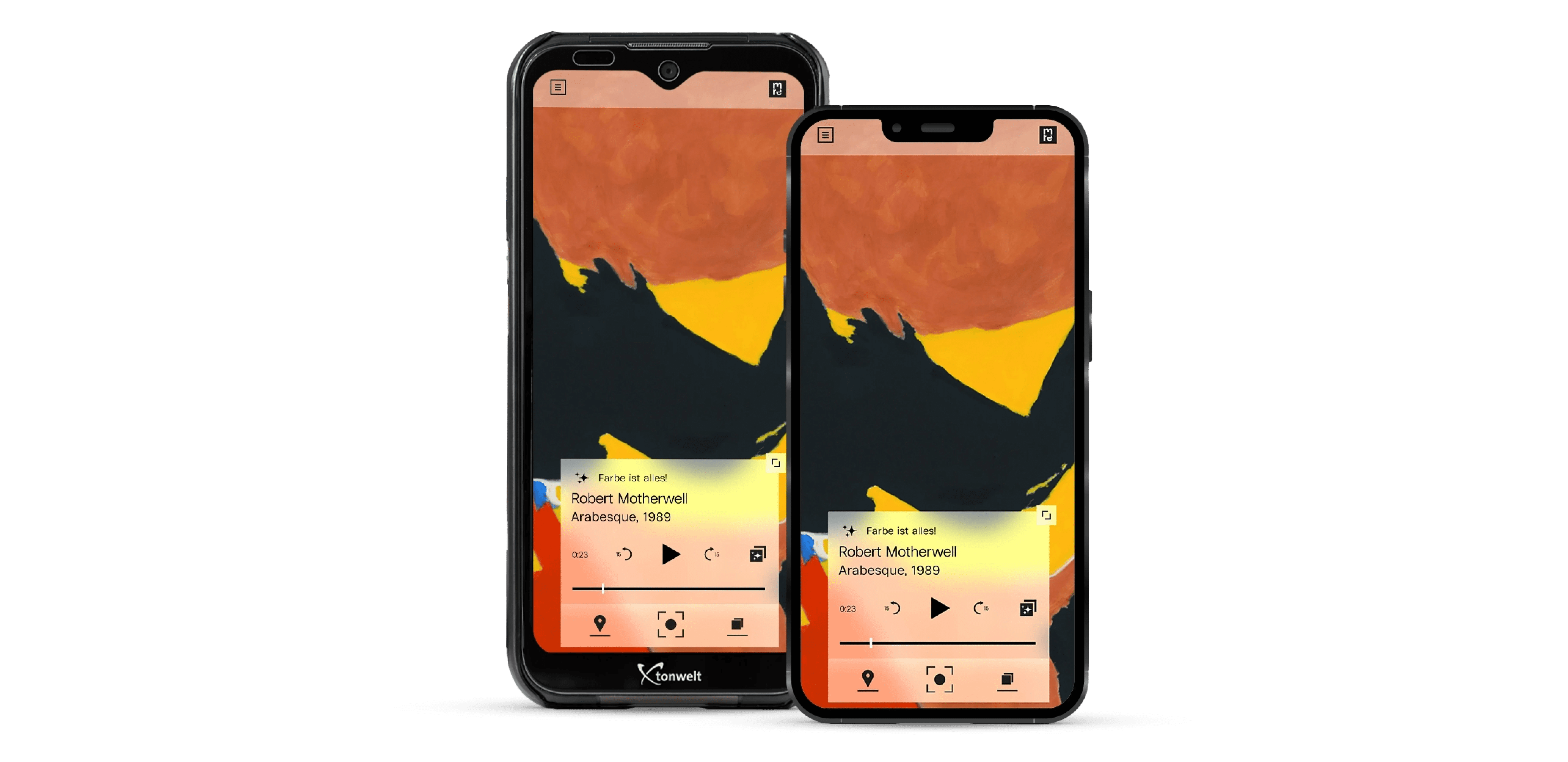
Available on museum devices or via mobile app
Designing a flexible museum guide
The media guide was designed to make the museum easy to explore while keeping the experience visually calm and focused on the artworks.
Key features include:
Artwork recognition
Instead of entering numbers manually, visitors can simply scan an artwork to access the corresponding station. This optical recognition system simplifies interaction and makes the experience more intuitive.
Multiple thematic tours
Visitors can explore the museum through several curated tours, including collection highlights, an architecture tour, and a children’s tour created with and for young visitors. This tour offers a more playful perspective on the artworks and encourages families to explore the museum together. Alternatively, visitors can also move through the museum freely and access artworks independently.
Rich artwork information
Each artwork includes a detailed digital page with images, texts, quotes, videos and additional contextual information.
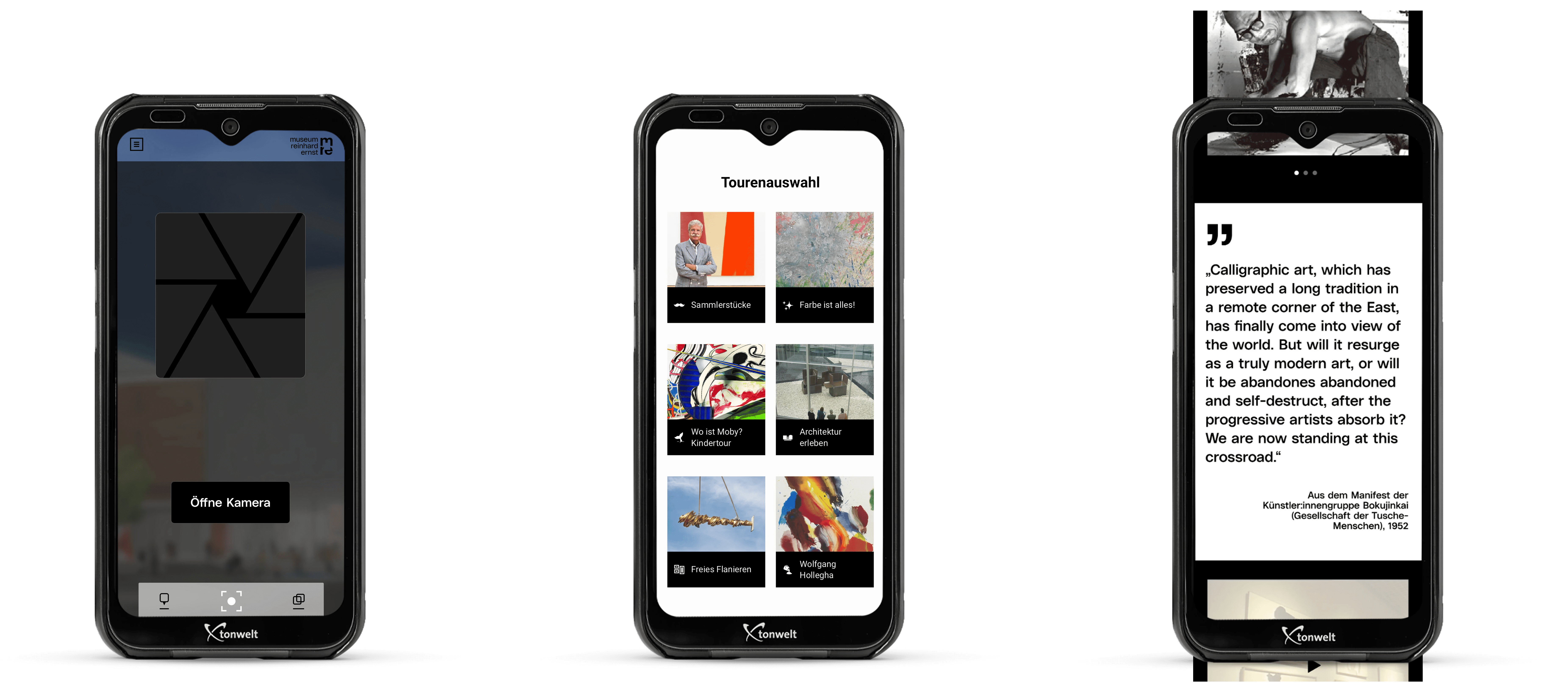
Core features: artwork recognition, curated tours and rich artwork information
My role & responsibilities
I contributed to the design of the multimedia guide interface, focusing on clarity, spatial orientation and intuitive interaction for museum visitors.
My responsibilities included:
UX/UI design for the media guide screens
Designing digital maps of the museum galleries
User flow testing and validation
CMS corrections and implementation adjustments
Collaboration with developers and the content team
This required aligning the interface with both the technical framework and the curatorial structure of the museum content, ensuring that digital interaction remained unobtrusive within the gallery experience.
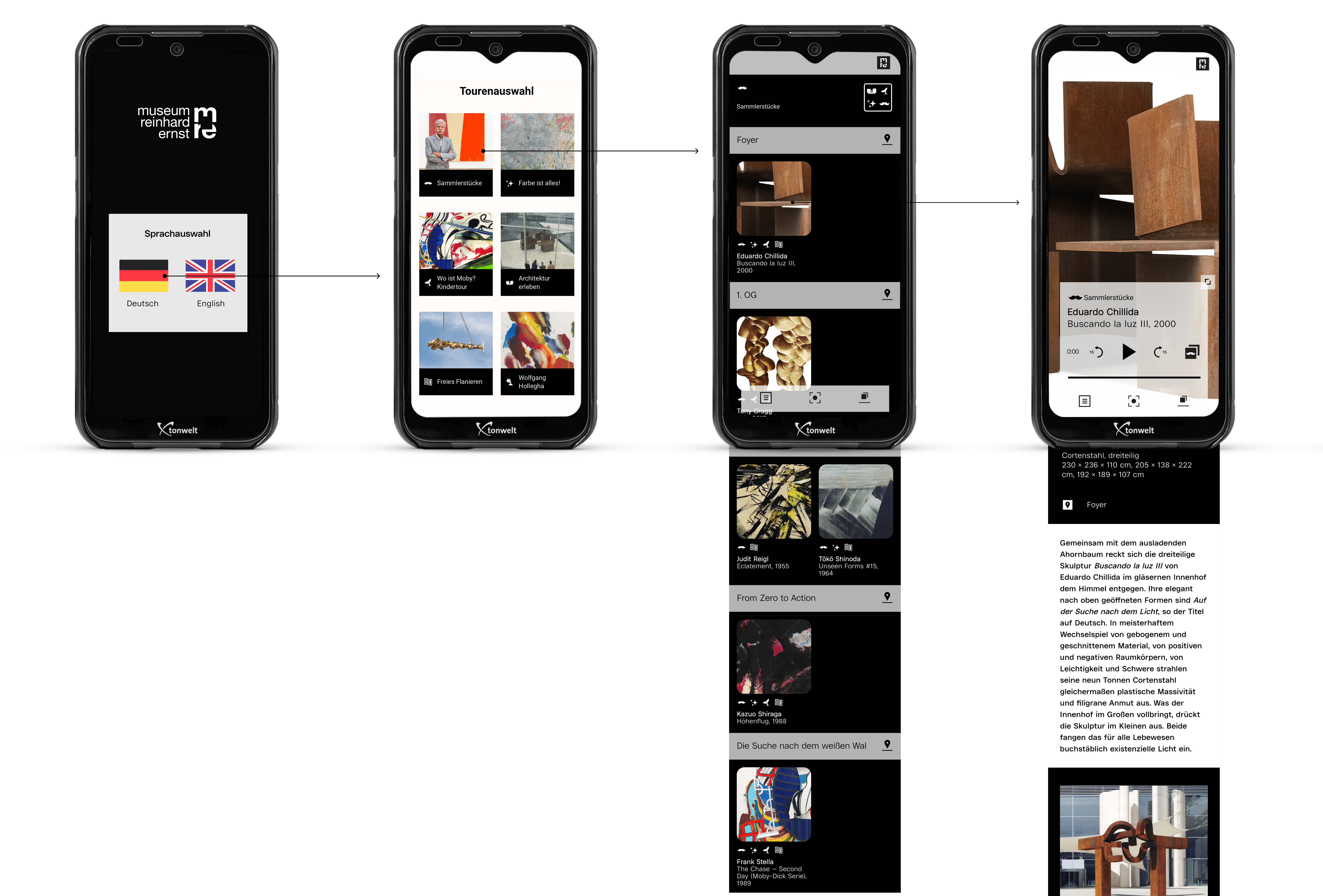
Core user flow from onboarding to artwork exploration
Supporting spatial navigation
Supporting spatial navigation required more than just designing a map interface. The system is built on structured floor plans that define how artworks are positioned and accessed within the museum.
These floor plans serve as the foundation for the navigation experience, connecting each artwork to a specific location and enabling visitors to move through the museum in a clear and intuitive way.
By linking spatial data with digital content, the system ensures that navigation remains consistent between the physical environment and the media guide.
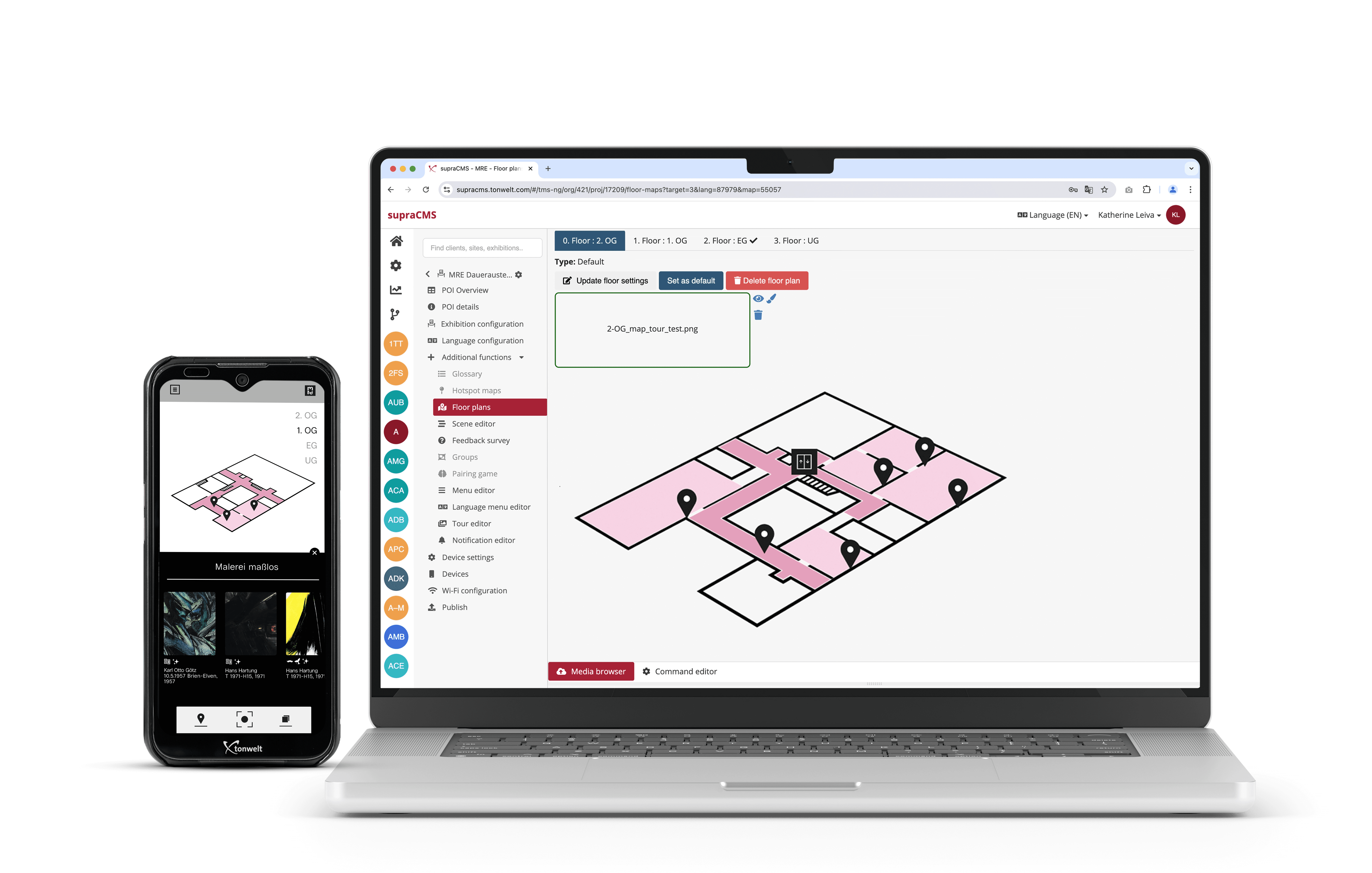
Floor plans linking artworks to their physical location in the museum
Interface design for art museums
A key component of the system was the development of a media player interface designed specifically for art museums.
The player was designed with a minimal visual language, keeping interaction elements subtle while ensuring that controls remain clearly visible. This allows visitors to focus on the artwork while still accessing multimedia content.
The interface balances functionality with visual restraint, supporting the experience without competing with the artwork.
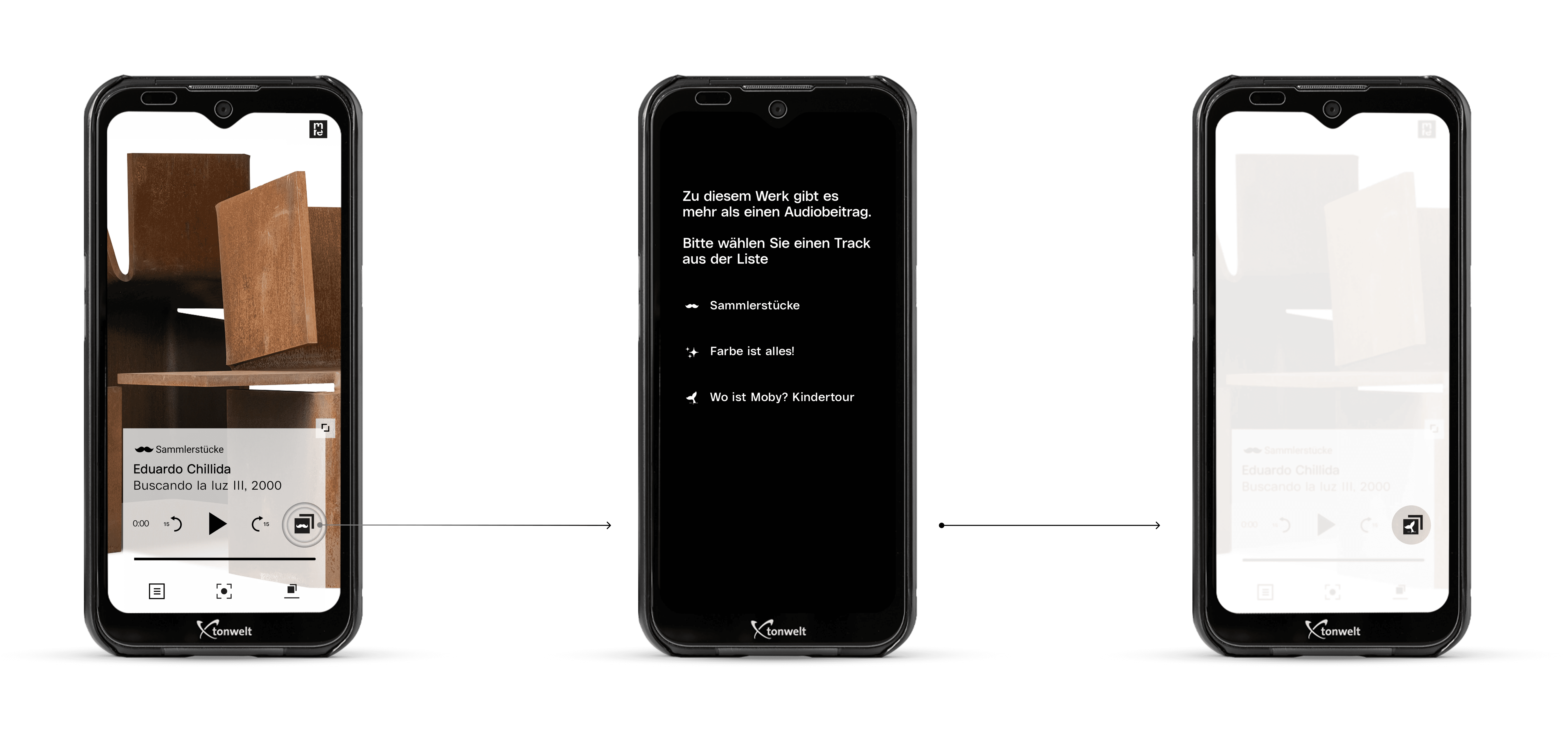
Selecting and switching between audio tracks within a single artwork
Outcome
The result is a multimedia guide that supports a flexible and intuitive museum visit, allowing visitors to explore artworks, follow thematic tours or navigate the museum independently.
Visitors can follow curated tours, explore artworks independently or dive deeper into the stories behind the collection through multimedia content.
The system integrates spatial navigation, artwork recognition and multimedia storytelling to create a seamless connection between the museum’s physical environment and its digital interpretation.
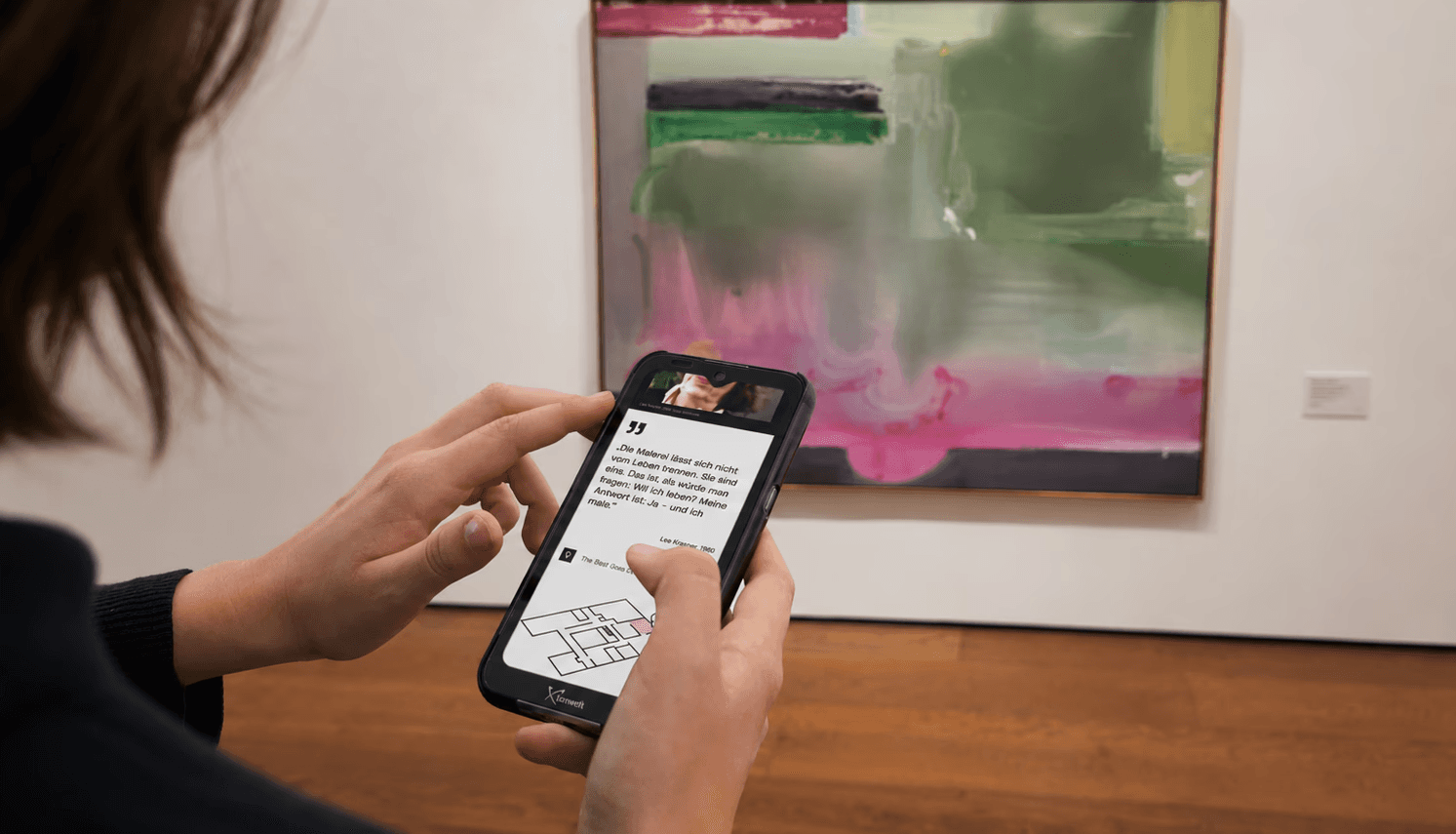
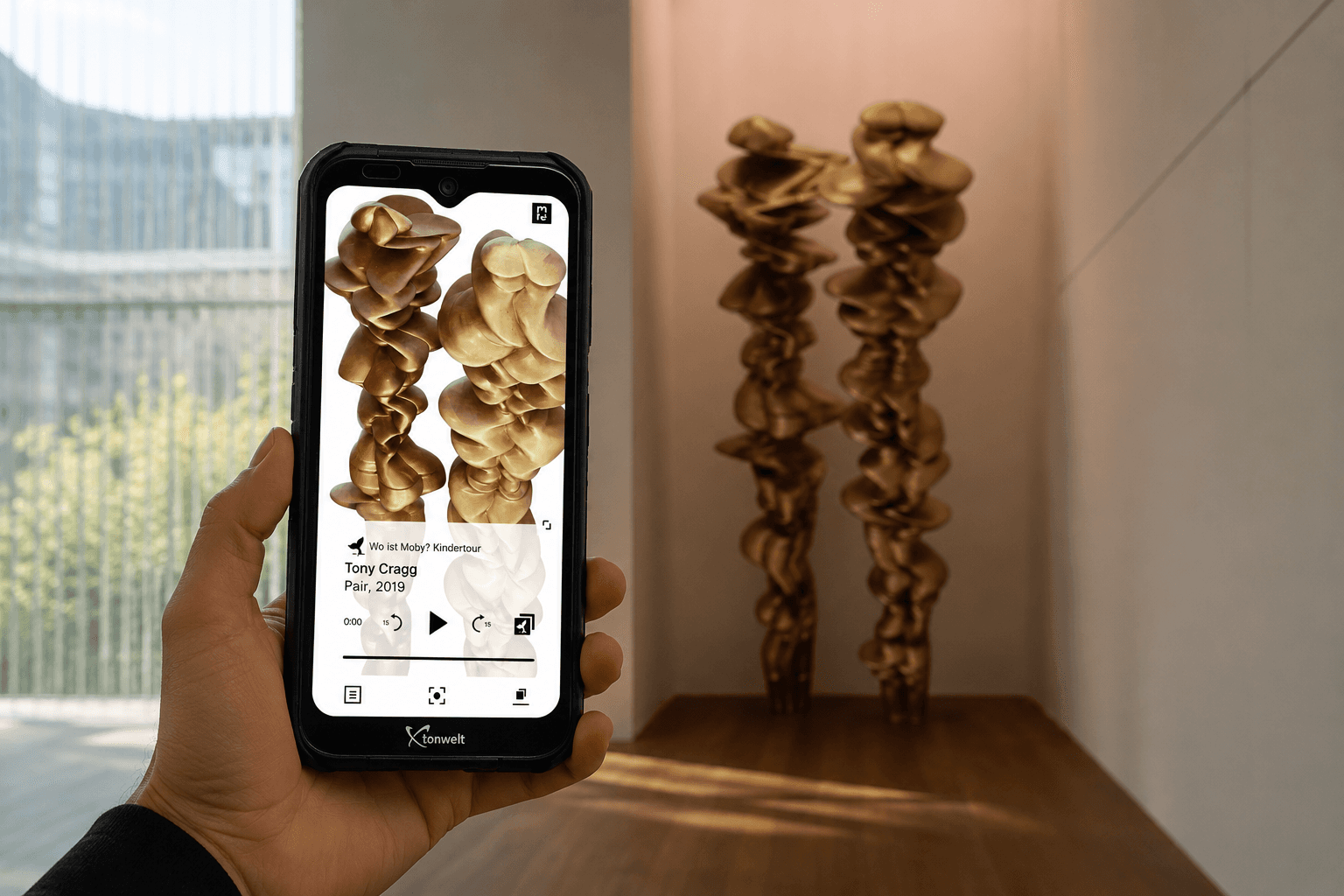
Real-world use of the media guide within the museum
Learnings
This project reinforced several key principles in my practice:
I learned that designing for spatial environments requires aligning digital navigation with visitors’ physical movement through the museum
Interfaces in art museums should remain visually subtle so that the focus stays on the artworks
Supporting both guided tours and free exploration creates a more flexible visitor experience
Features like artwork recognition can simplify interaction and reduce friction in the user journey
Clear information hierarchy is essential when presenting multimedia content in cultural spaces