Designing a multilingual, multisensory media guide ecosystem for museum visitors using smartphones and dedicated devices
Role
UX/UI design, wireframing, prototyping and user testing across the media guide experience
Context
Private art foundation with a strong focus on modern and contemporary art
Product type
Multimedia guide delivered through a Progressive Web App (PWA) for on-site visitors, complemented by a web-based interface. Audio and visual content with structured navigation.
Status
Delivered and published
Context & challenge
The Hilti Art Foundation is a private art institution dedicated to modern and contemporary art. Its exhibitions bring together a wide range of artworks and narratives, requiring a digital guide that supports visitors with different levels of familiarity with art while preserving a calm and focused museum atmosphere.
The media guide was conceived as a central part of the on-site experience, accessible on visitors’ own smartphones as a Progressive Web App (PWA) and on dedicated multimedia devices used within the exhibition spaces.
Designing the media guide involved addressing several interconnected challenges:
Going beyond a traditional audio guide by enabling a dialog-based, multilayered experience without overwhelming visitors
Bringing together multiple content formats: audio, text and visual material, into a coherent and intuitive system
Designing for a bilingual experience (English and German), ensuring clarity, consistency and balanced content length across languages
Supporting both smartphone use and dedicated multimedia devices, each with different technical and spatial constraints
Allowing the system to remain modular and scalable, so it can evolve with future exhibitions
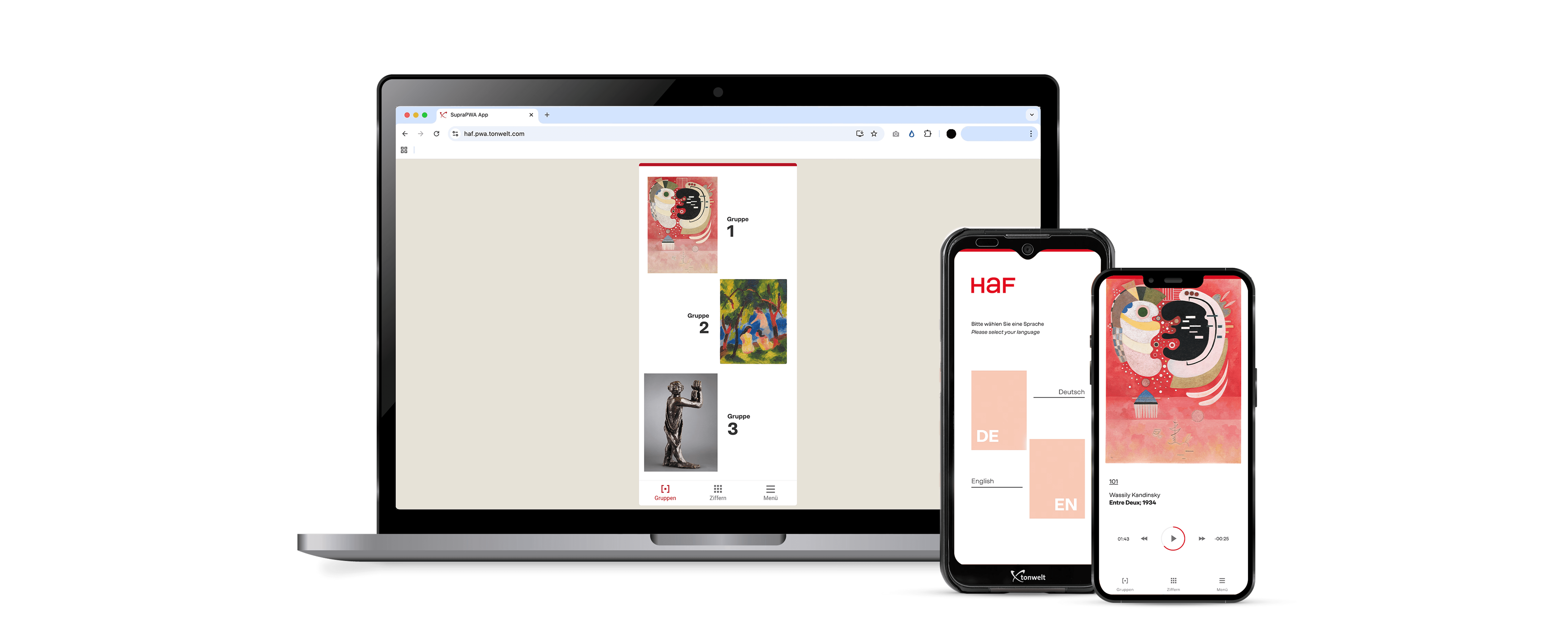
The experience was designed to function across multiple contexts - including a web-based interface and on-site devices - supporting flexible access to content during the museum visit and beyond.
→ Explore the media guide (PWA)
Designing a multilayered content experience
Rather than replicating a linear audio guide, the media guide was designed as a multilayered content experience that allows visitors to choose how deeply they want to engage with each artwork.
Content is organized in structured groups and presented through different media formats, enabling visitors to move fluidly between short, immediate insights and more in-depth perspectives. This layered approach supports diverse visitor needs - from those seeking quick context to those interested in extended storytelling - without overwhelming the overall experience.
A key design focus was maintaining clarity while handling content complexity. Navigation, hierarchy and interaction patterns were carefully defined to ensure that different media types could coexist within a single, coherent system, remaining intuitive across both smartphones and dedicated multimedia devices.
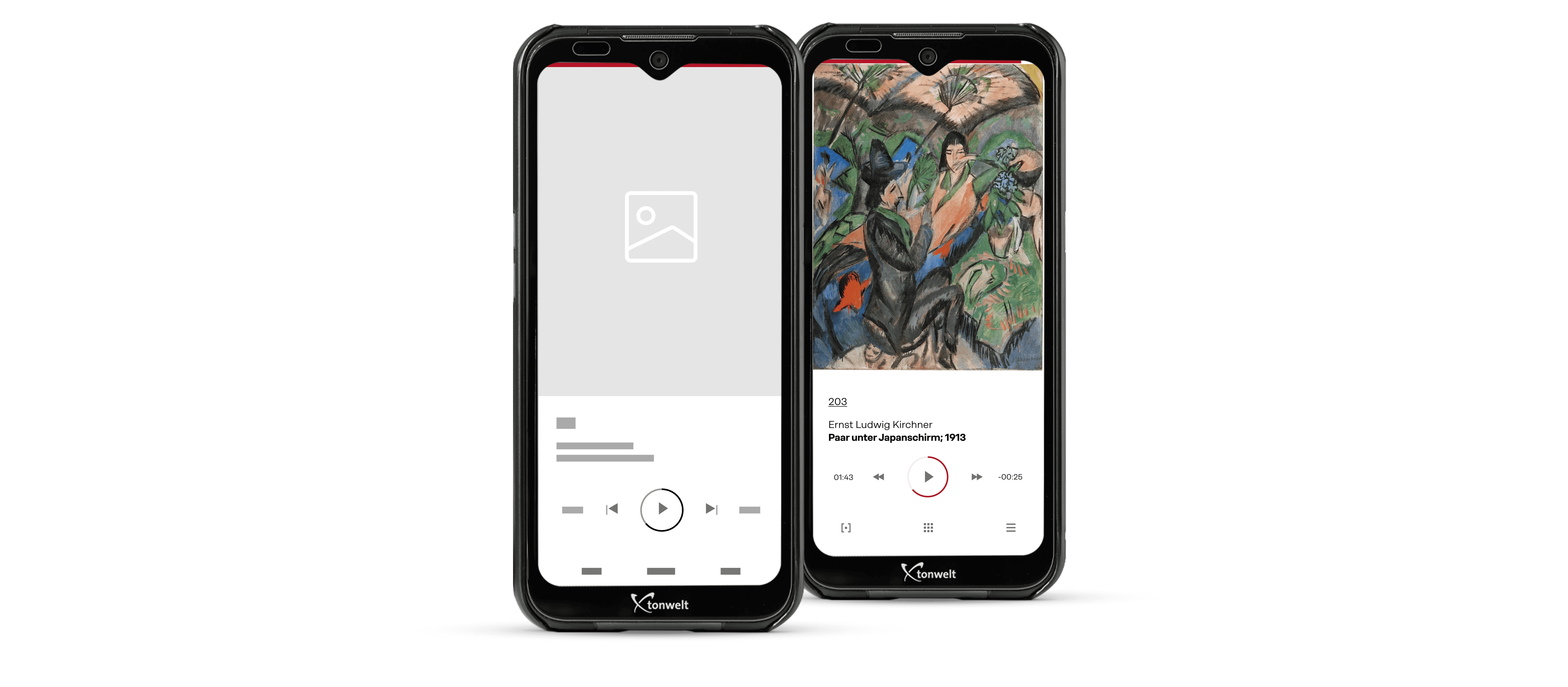
Early structure and content hierarchy: from wireframes to the final content experience.
My role & responsibilities
I worked on the UX/UI design of the media guide across wireframes, UI design and prototyping, with a focus on clarity, consistency and ease of use across devices.
My responsibilities included:
Defining information structure and navigation through wireframes
Designing UI screens that support different content types in a unified system
Creating prototypes to validate interactions and refine the user journey
Participating in user testing to identify friction points and improve usability
Uploading and managing multimedia content in the CMS to ensure consistency across formats
Throughout the process, I collaborated with the technical team and developers to ensure design decisions were feasible and translated accurately into the final product.

System overview: a high-level view of the core screens that support the visitor journey through the museum.
Core user flow
The core flow was designed to keep visitors oriented within the exhibition while enabling flexible exploration of content.
Visitors can enter the guide, browse structured sections and artworks, and access content in layers - moving from quick insights to deeper context - while maintaining a smooth, low-effort interaction that fits the museum setting.
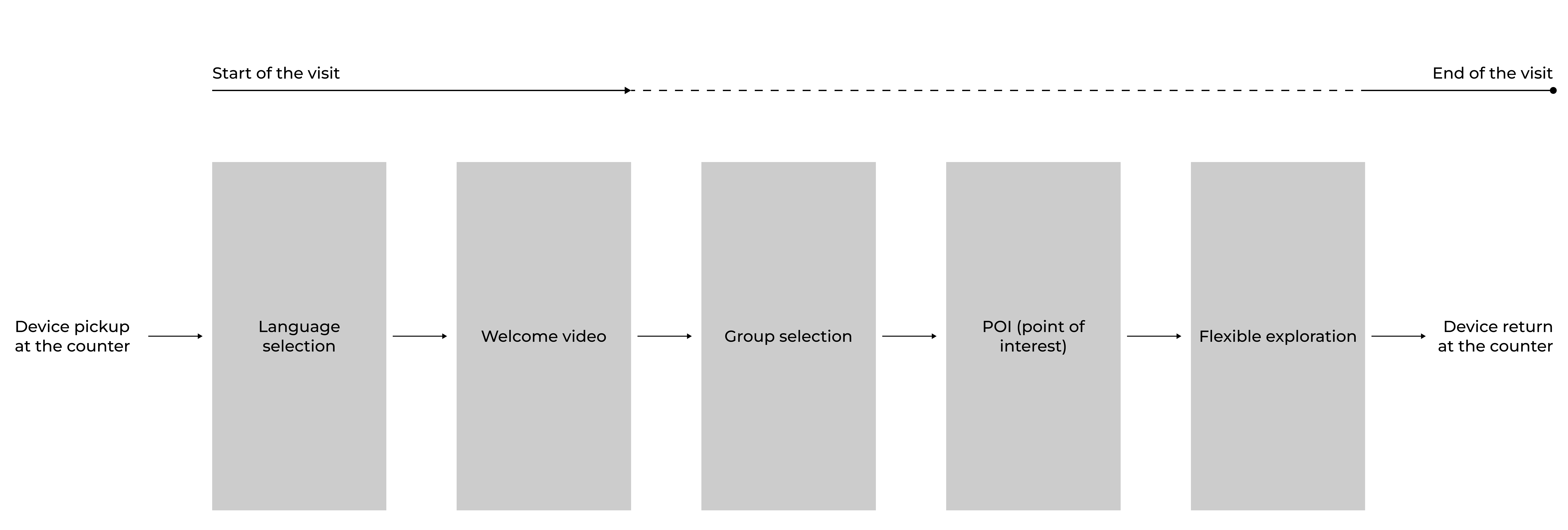
Simplified overview of the core visitor journey, from device pickup to return.
Outcome
The result is a delivered and published media guide that supports the museum visit through an intuitive, content-rich experience designed for both smartphone and dedicated devices.
Its modular structure allows the guide to be expanded over time and adapted to future exhibitions, supporting long-term scalability while maintaining a consistent user experience. The guide is actively used on-site, supporting real visitors during their museum experience.
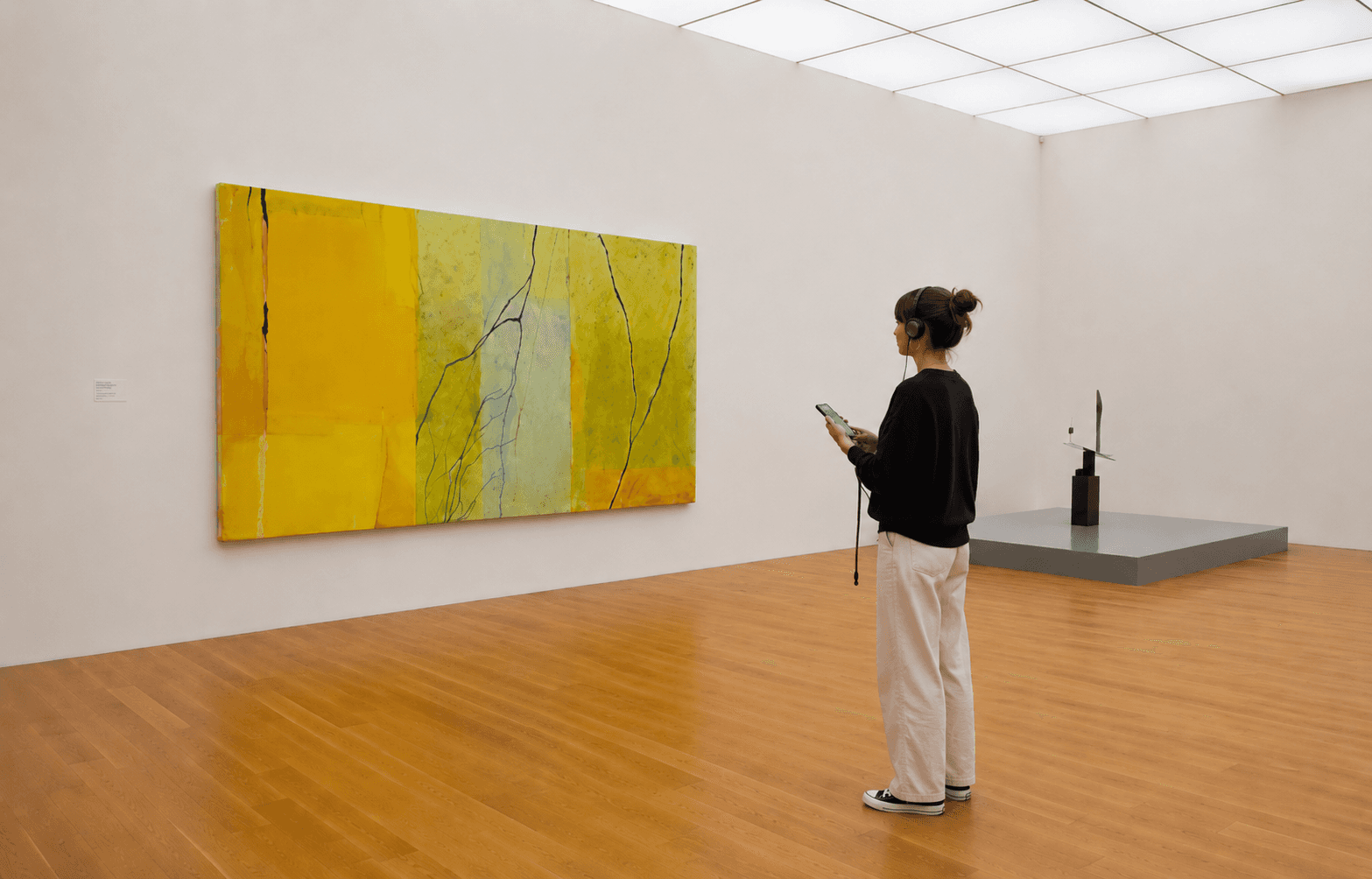
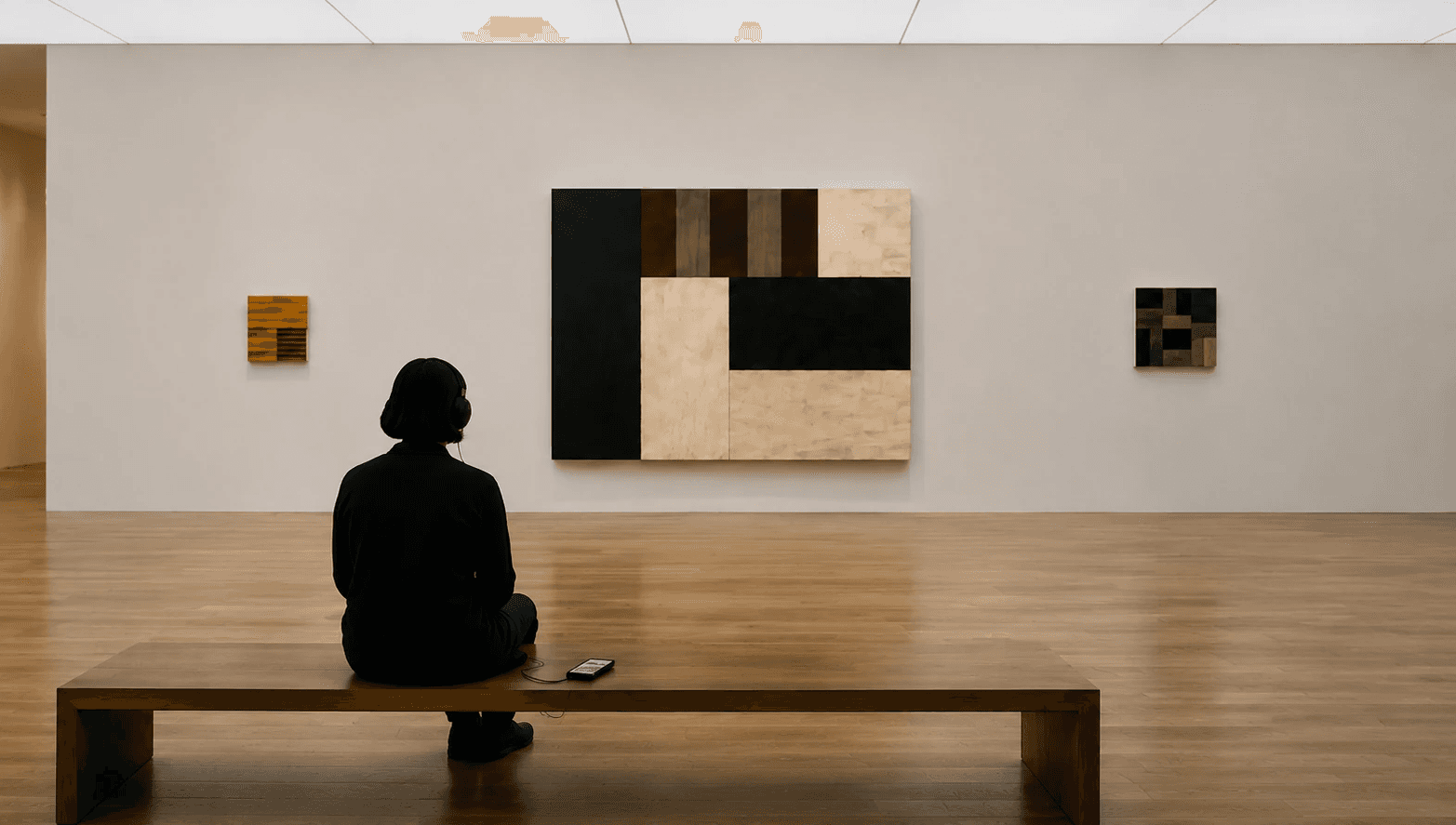
Visitors using the multimedia guide on-site at the Hilti art foundation
Press mention
“The new media guide turns the museum visit into a multisensory experience that goes far beyond a classic audio guide, creating a dialog between visitors and artworks.”
- KuL - die Kulturzeitung, August 2025
→ Read the full article (German)
Learnings
This project reinforced how cultural products benefit from a layered approach: combining storytelling and usability while allowing visitors to choose their depth of engagement.
It also strengthened my experience translating complex multimedia content into a structured, scalable system - from early wireframes and prototypes to CMS-based content implementation and real-world constraints across devices.