Designing under real constraints: time, content, technology
Most interfaces are designed under constraints. Time, content, technology and accessibility requirements constantly shape the final experience in ways that are often invisible to users. Designing for cultural institutions made me realize that good UX is rarely about creating perfect screens. It’s about building systems flexible enough to adapt to real-world complexity.
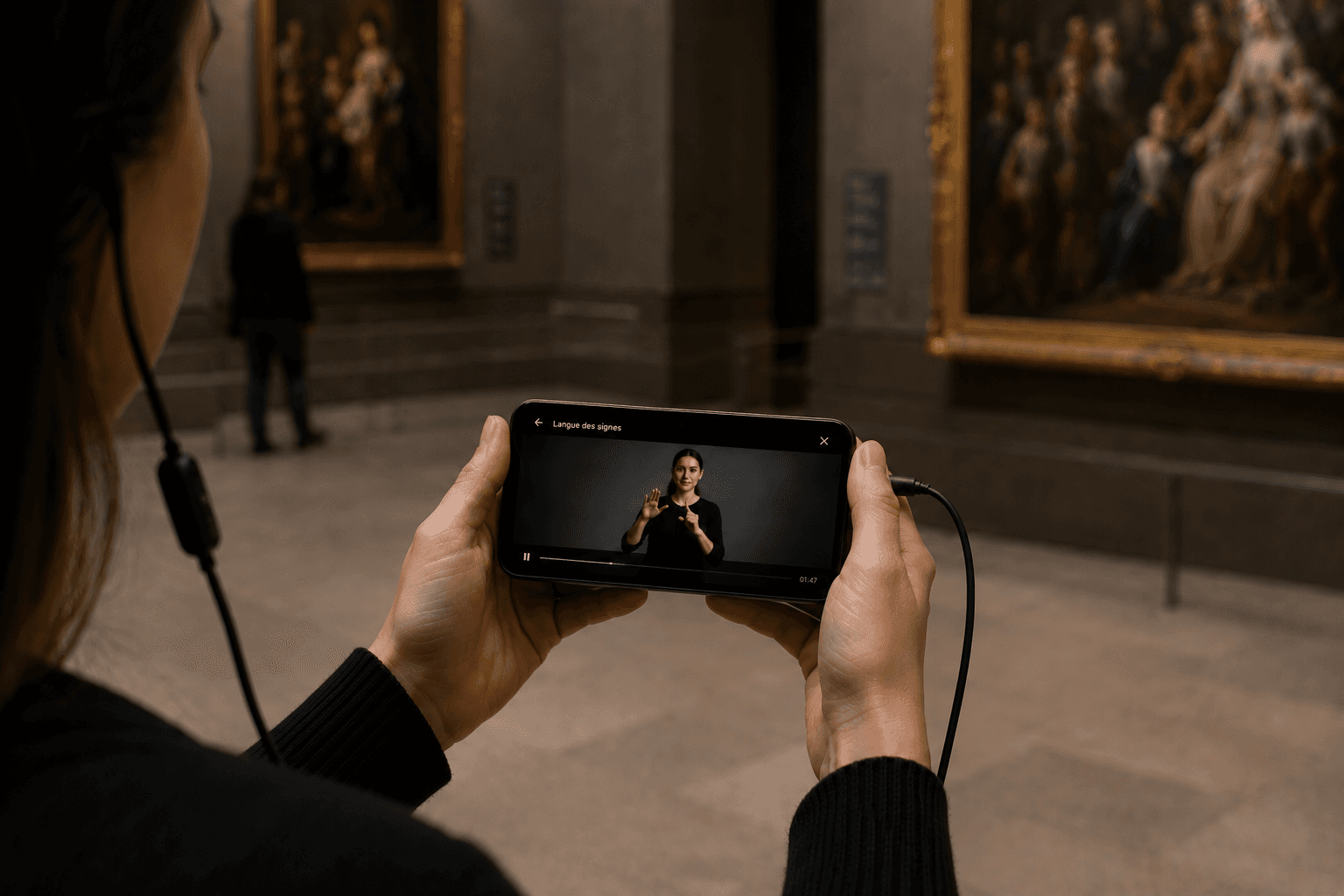
Design case studies often present clean processes, ideal timelines and carefully curated outcomes.
Real projects rarely work that way.
Most of the time, interfaces are shaped long before the visual design phase begins. Technology, content structures, accessibility requirements, operational limitations and deadlines all influence the final experience in ways that are often invisible from the outside.
One of the clearest examples of this was working on the Louvre multimedia guide redesign, where the interface needed to support nine languages, multiple accessibility modes and a large variety of visitor needs within a single cohesive system.
At first glance, multilingual design may seem like a simple translation task. In reality, it affects almost every aspect of the interface.
Some languages required significantly more space than others. Certain layouts that worked perfectly in English quickly became unstable when tested with German or Portuguese text. Different alphabets also introduced completely different visual rhythms and spacing considerations.
The interface couldn't depend on fixed layouts or perfectly balanced text lengths. It needed to remain flexible without losing clarity.
Accessibility requirements added another layer of complexity to the system. The interface had to support multiple accessibility modes, including visual impairments, hearing impairments, sign language and easy language options, while still maintaining consistency throughout the experience.
This changed the way I approached interface design entirely.
Instead of thinking in terms of isolated screens, I started thinking more about resilient systems. Systems capable of adapting to changing content, different reading behaviors, multiple devices and a wide range of visitor needs without collapsing visually or structurally.
Many of the most important design decisions were not purely aesthetic. They were structural.
Spacing, iconography, hierarchy, button sizing and content organization all became directly connected to usability across languages and accessibility modes. Even small interface decisions could affect whether the system remained understandable for thousands of different visitors.
What I found most interesting is that many of these constraints ultimately improved the quality of the design itself.
Real-world constraints rarely make design worse. They force it to become clearer, more flexible and more intentional.